How to Sew a Simple Tote Bag
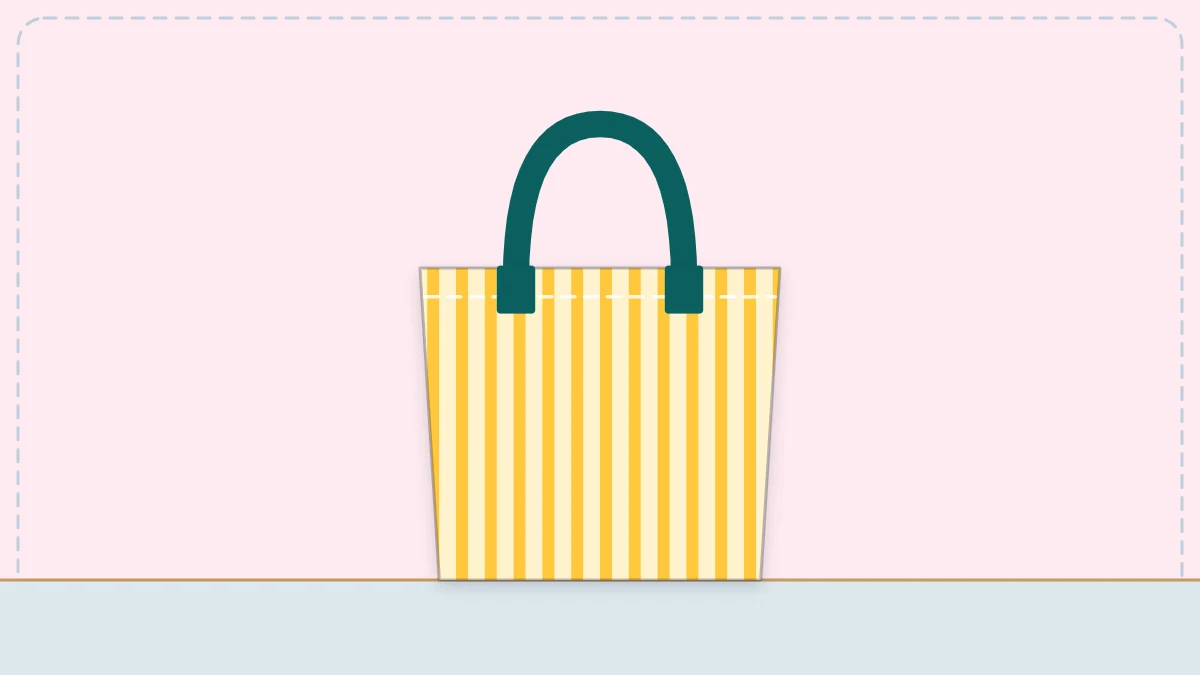
An unlined tote bag with two folded straps, sewn with straight seams and one hem. Includes cut sizes, zigzag-finished seams and the square-and-X stitch that secures the straps.
Tutorial at a glance
Materials
- 3/4 yard (0.7 m) of medium-weight woven fabric, at least 42 in (107 cm) wide
- All-purpose polyester thread
- Universal 90/14 machine needle
- Sewing clips
- Ruler or seam gauge and fabric marker
- Scissors or rotary cutter and mat
- Iron and ironing board
A simple tote bag is a practical first accessory because it uses only straight seams, one hem and two folded straps. This version is unlined, so there are fewer layers to manage, and the raw edges inside are tidied with a zigzag stitch. The only part that needs patience is sewing through the thick spots where the straps meet the bag.
The finished tote measures 14 inches wide and 15 inches tall (35.5 x 38 cm), with straps that form a handle loop of about 20 inches (51 cm). It is flat, without a boxed base, and suits books, a few groceries or a sewing project on the go.
What You Need
- 3/4 yard (0.7 m) of medium-weight woven fabric, such as cotton canvas, duck or denim, at least 42 inches (107 cm) wide
- All-purpose polyester thread
- A universal 90/14 machine needle
- Sewing clips, which grip thick layers better than pins
- A ruler or seam gauge and a fabric marker
- Scissors, or a rotary cutter with a mat
- An iron and ironing board
Canvas gives a tote that holds its shape and stands up to weight. Quilting cotton also works with an 80/12 needle, but the bag will be soft and is better for light loads. Skip very heavy canvas for a first tote, because a home machine may struggle with the strap layers. The article on needles and thread explains how needle size relates to fabric weight. Prewash cotton fabric, then press it flat before cutting.
Cutting List
The seam allowance, the distance from the raw edge to the stitching, is 1/2 inch (1.3 cm) on the sides and bottom. The top hem uses 1 1/2 inches (3.8 cm).
| Piece | Quantity | Cut Size |
|---|---|---|
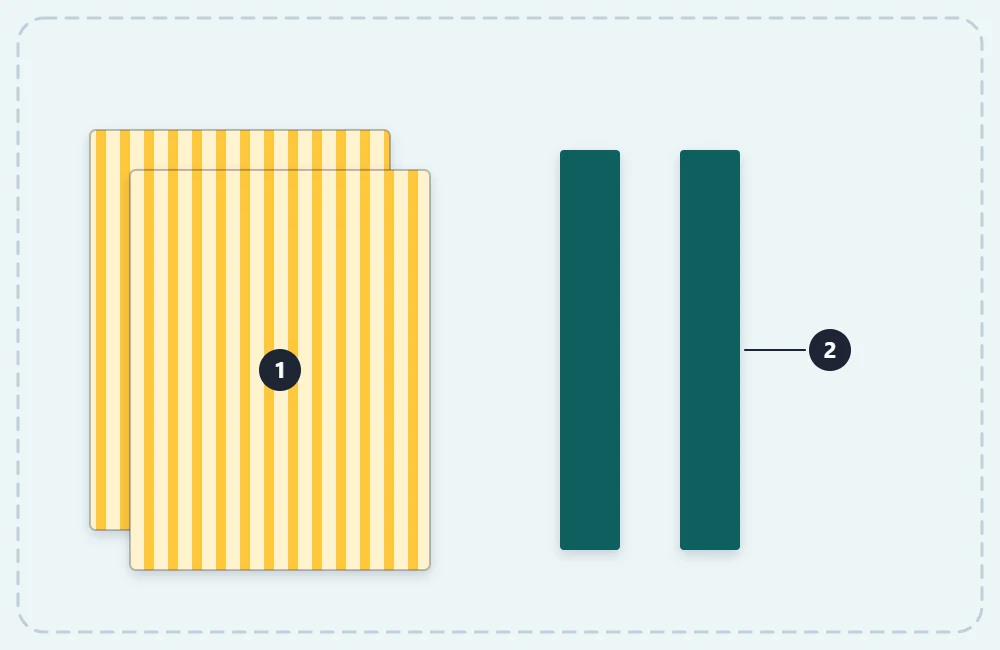
| Bag body | 2 | 15 in wide x 17 in tall (38 x 43 cm) |
| Strap strip | 2 | 4 x 22 in (10 x 56 cm) |
The two side seams take 1 inch off the 15 inch width, leaving 14 inches. The bottom seam uses 1/2 inch and the hem 1 1/2 inches of the 17 inch height, leaving 15 inches. Each strap strip is folded into four layers and finishes 1 inch (2.5 cm) wide.
Make the Straps
- Press a center crease. Fold one strap strip in half lengthwise, wrong sides together, and press. Open it out again.
- Fold the edges to the center. Bring both long raw edges in to meet at the crease and press.
- Fold in half again. Fold along the original crease so the raw edges are hidden inside. The strap is now 1 inch (2.5 cm) wide and four layers thick. Clip along its length.
- Topstitch both long edges. Topstitching is a visible row of stitching sewn from the outside. Sew 1/8 inch (3 mm) from each long edge, using a stitch about 3 mm long.
- Finish the short ends. Sew a zigzag stitch across each short end to stop it from fraying. Repeat all five steps for the second strap.
Sew the Bag Body
- Join the two rectangles. Place the body pieces right sides together and clip. Sew down one 17 inch side, across the 15 inch bottom and up the other side with a 1/2 inch (1.3 cm) seam allowance. Pivot at the corners with the needle down, and backstitch 3 or 4 stitches at the start and end.
- Clip the bottom corners. Cut diagonally across the two bottom corners, about 1/8 inch (3 mm) from the stitching, without cutting the stitches.
- Finish the raw edges. Sew a zigzag stitch along the seam allowances, stitching both layers together close to the raw edge. On an unlined bag this keeps the inside from fraying. The seam allowance guide describes this finish in more detail.
- Press the first hem fold. With the bag still wrong side out, fold the top edge down 1/2 inch (1.3 cm) toward the wrong side and press all the way around.
- Press the second fold. Fold the edge down another 1 inch (2.5 cm) and press. Press the side seam allowances to one side so they lie flat inside the hem, then clip.
- Stitch the hem. Sew all the way around, close to the lower fold, about 7/8 inch (2.2 cm) from the top edge. A removable free arm, if your machine has one, makes sewing this circle easier. The same fold is explained in how to sew a hem.
Attach the Straps
- Mark the strap positions. Keep the bag wrong side out. On the hem of one side, make a mark 3 1/2 inches (9 cm) in from each side seam. Repeat on the other side of the bag.
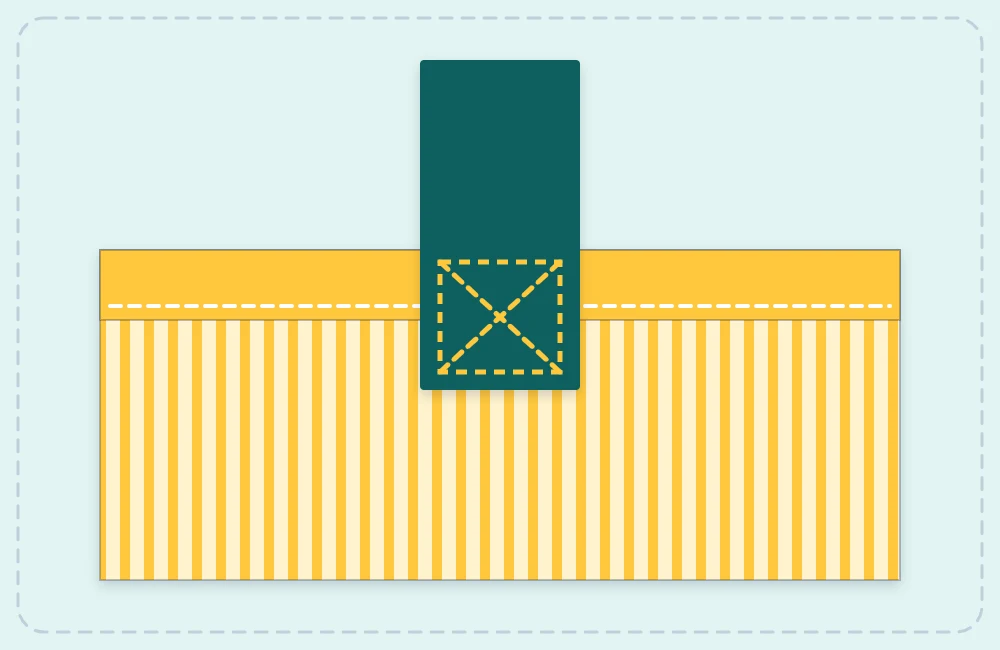
- Position the first strap. Lay one end of a strap on the hem with its outer edge on a mark and its short end level with the hem stitching, so it overlaps the hem by 1 inch (2.5 cm). Bring the other end to the second mark on the same side, checking that the strap is not twisted. Clip both ends.
- Sew a square with an X. Stitch a 1 inch (2.5 cm) square through the strap end and the hem, pivoting at each corner. Then sew diagonally from corner to corner in both directions to form an X. Backstitch to finish.
- Repeat for the other ends. Sew the remaining three strap ends the same way, with the second strap on the opposite side of the bag.
- Turn and press. Turn the tote right side out, push out the bottom corners with a blunt tool and press the bag flat.
Watch out
The strap squares are the thickest part of the bag. Sew slowly, keep your fingers to the sides of the presser foot, and turn the handwheel by hand if the machine labors. Forcing it can bend or break the needle.
Troubleshooting
- Skipped stitches at the straps. The needle is too fine or dull for the layers. Switch off the machine and fit a fresh 90/14 needle.
- A strap is twisted. Unpick the square at one end with a seam ripper, flatten the strap and sew it again.
- The hem ripples. The folds were not even. Re-press using a seam gauge, and see the guide to pressing for firm, flat folds.
- The straps sit unevenly. Measure all four marks from the side seams, not from the fabric edges.
Simple Changes
For longer shoulder straps, cut the strips 4 x 26 inches (10 x 66 cm). For a bigger bag, add 1 inch (2.5 cm) to the finished width and 2 inches (5 cm) to the finished height to get the cut size of each body piece. A contrasting fabric for the straps is an easy way to use up a remnant.
Frequently asked questions
What is the best fabric for a first tote bag?
A medium-weight cotton canvas or duck is sturdy without being too thick for a home machine. Quilting cotton is easier to sew but makes a softer bag for lighter loads.
How much weight can an unlined tote carry?
That depends on the fabric, the thread and the stitching, so there is no fixed figure. The square-and-X stitching spreads the load at the straps; for heavy items, choose canvas and check the seams from time to time.
Can cotton webbing be used for the straps?
Yes. Two 22 inch lengths of 1 inch wide cotton webbing can replace the folded fabric straps. Zigzag the cut ends and attach them the same way.