Sewing Machine Needles and Thread: How to Choose the Right Ones
Needle sizes, needle types and thread choices explained for beginners, with a simple fabric chart and the signs that a needle needs replacing.
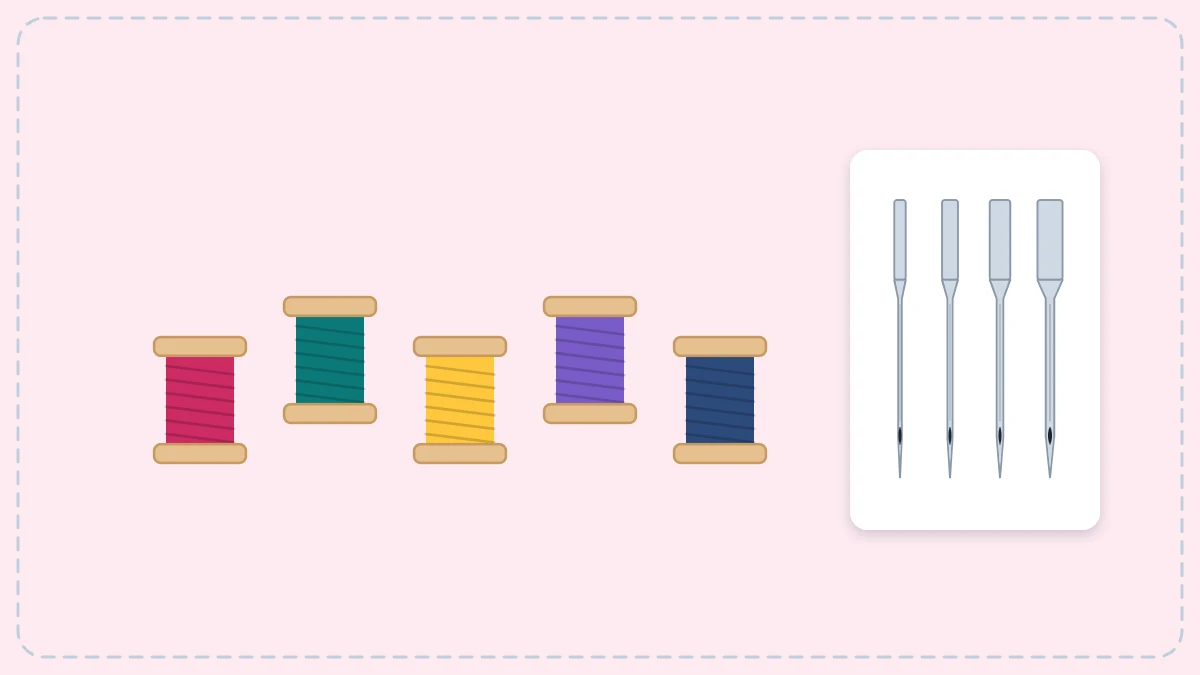
Sewing machine needles and thread are the cheapest parts of any project, and they cause a surprising share of beginner frustration. A needle that is too thick leaves holes, one that is too fine bends or breaks, and tired thread snaps halfway down a seam. Matching both to your fabric takes a minute and removes a long list of problems before they start.
How a Machine Needle Is Built
Machine needles are not the same as hand needles. The eye sits at the pointed end, and the top is shaped to lock into the machine.

- Shank: the thick upper end that goes into the needle clamp. On home machine needles one side is flat, so the needle can only be inserted one way.
- Shaft: the long, slim body. Its thickness is what the needle size describes.
- Eye: the hole the thread passes through. Thicker needles have larger eyes.
- Point: the tip that enters the fabric. Its shape is what separates one needle type from another.
The parts of a sewing machine guide shows where the needle clamp and its screw are located.
Reading Needle Sizes
Needle packs show two numbers separated by a slash, such as 80/12. The first is the European size and the second is the American size. Both describe the same needle, and in both systems a higher number means a thicker needle.
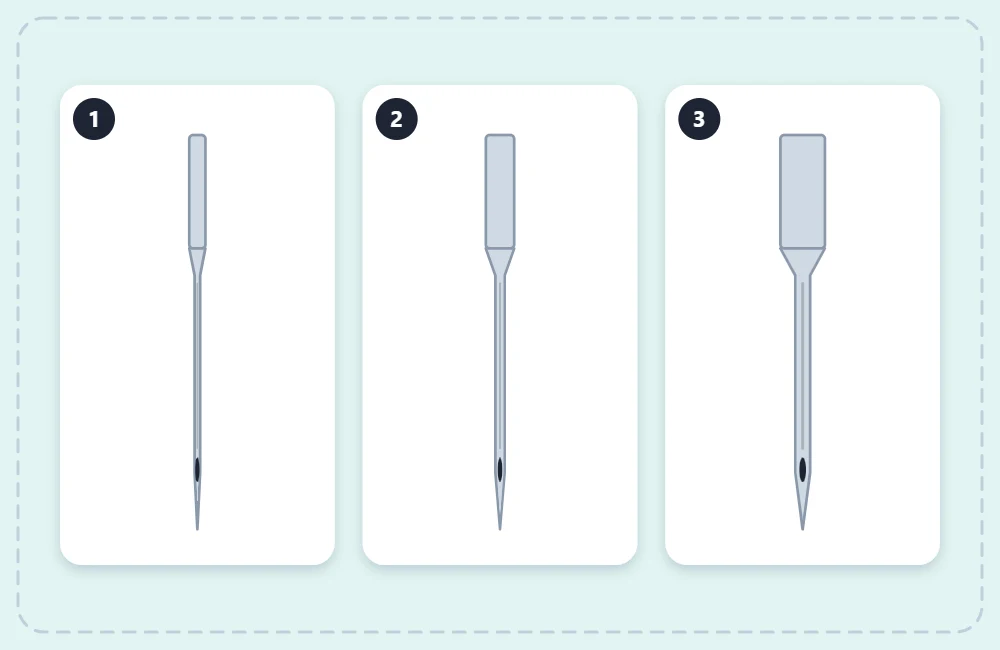
The rule is simple: light fabric needs a fine needle, and heavy fabric needs a thick one. Most beginner projects fall in the middle of the range.
| Fabric | Needle size | Thread |
|---|---|---|
| Lightweight wovens such as voile and lawn | 70/10 | All-purpose polyester or fine cotton |
| Medium-weight wovens such as quilting cotton and linen blends | 80/12 | All-purpose polyester or cotton |
| Heavier wovens such as canvas and light denim | 90/14 | All-purpose polyester |
| Thick denim and several layers of canvas | 100/16 | All-purpose or heavy-duty polyester |
If you are still deciding what to sew with, the guide on how to choose fabric explains fabric weight and why quilting cotton is the easiest starting point.
Needle Types Worth Knowing
Size is half the story. The shape of the point decides how the needle passes through the fabric.
- Universal: a slightly rounded point that handles most woven fabrics and some stable knits. A pack of universal needles in mixed sizes covers nearly every beginner project.
- Ballpoint or jersey: a rounded tip that slides between the loops of knit fabric instead of piercing them. Use it when a universal needle skips stitches on a knit.
- Sharp: a slim, very pointed tip for fine, tightly woven fabrics and for neat topstitching.
- Denim: a strong shaft and sharp point made for dense, heavy fabrics.
For a first project in quilting cotton, a universal 80/12 needle is the standard choice.
Choosing Thread
All-purpose polyester thread is the practical default. It is strong, has a little give, works on almost every fabric and comes in every color. Cotton thread is a fine choice for cotton fabrics and quilting, though it has no stretch and suits woven fabric only. Heavy-duty thread is meant for thick materials and needs a larger needle to match.
A few points make a visible difference:
- Buy decent thread. Smooth, even thread sheds less lint and breaks less often. Hold a length up to the light: if it looks fuzzy and uneven, expect trouble.
- Avoid very old thread. Thread becomes brittle with age. If a length snaps easily when you tug it, do not put it in the machine.
- Use the same thread top and bottom. Winding the bobbin from the same spool keeps the stitch balanced, which matters when you start adjusting sewing machine tension.
- Match the color slightly darker. When no exact match exists, a shade darker than the fabric blends in better than a shade lighter.
Thread and needle must also suit each other. The thread should pass through the eye easily and without fraying. If it shreds as you sew, move up one needle size.
When to Change the Needle
Needles wear out long before they break. The point dulls, picks up tiny burrs and starts to punch through the fabric instead of slipping between the threads. Replace the needle after roughly 6 to 8 hours of sewing, at the start of a large project, or as soon as you notice any of these signs:
- skipped stitches or uneven stitch length
- a popping or thudding sound as the needle enters the fabric
- pulled threads or small snags along the seam
- thread that keeps shredding or breaking
- a needle that has hit a pin or looks even slightly bent
Many of the problems listed under common beginner sewing mistakes disappear with a fresh needle, which is why it is one of the first things to try.
How to Replace a Needle
- Switch off and unplug the machine. Raise the needle to its highest point with the handwheel and lower the presser foot to give yourself room.
- Hold the needle with one hand and loosen the needle clamp screw with the other. Pull the old needle straight down.
- Insert the new needle with the flat side of the shank facing the direction your manual shows. On most home machines the flat side faces the back.
- Push it up as far as it will go, then tighten the screw firmly.
Tip
Lay a small piece of paper over the needle plate before loosening the screw. If the needle slips from your fingers, it lands on the paper instead of dropping into the machine.
Dispose of used needles safely. A small lidded container kept in your sewing box holds bent pins and worn needles until it is full and can be taped shut and thrown away.
Frequently asked questions
Can a hand sewing needle be used in a sewing machine?
No. Machine needles have the eye at the pointed end and a shank shaped to fit the needle clamp, so a hand needle will not fit or form a stitch.
Do all sewing machines take the same needles?
Most modern home machines use the same standard flat-shank needle system, but some older and specialty machines do not. Check your machine's manual before buying.
Why does a machine needle keep breaking?
The usual causes are pulling the fabric while sewing, hitting a pin, or using a needle too fine for the fabric. A needle that is not pushed fully into the clamp can also strike the needle plate.
Is polyester or cotton thread better for a beginner?
All-purpose polyester is the easier starting point because it is strong and works on nearly every fabric. Cotton thread is a good option once you are sewing mostly cotton fabric.