How to Choose Fabric for a First Sewing Project
The right fabric makes a first project far easier. Learn the difference between woven and knit, how weight and grain affect sewing, and why prewashing matters.
The fabric decides how hard a first project feels. A stable, medium-weight cotton stays where you put it, takes a crease from the iron and feeds evenly under the needle. A slippery or stretchy fabric does none of those things. Knowing how to choose fabric comes down to four checks: whether it is woven or knit, how heavy it is, which way the grain runs and whether it has been washed.
Start With Quilting Cotton
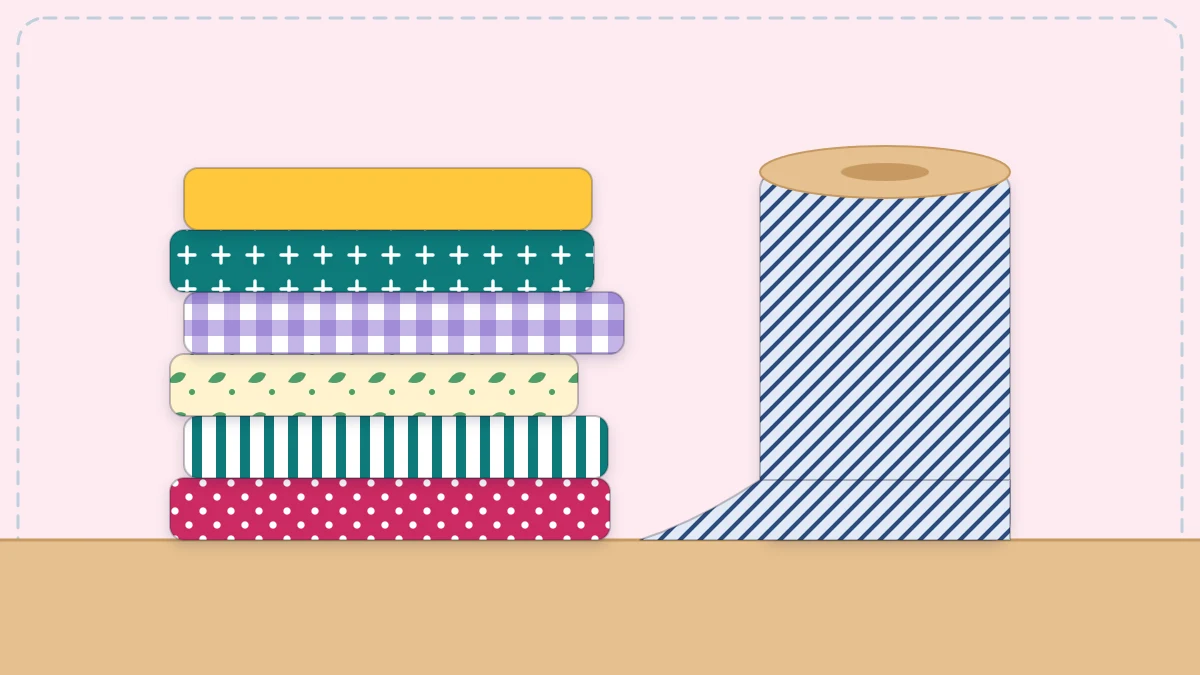
Quilting cotton is the easiest first fabric. It is a plain-woven, medium-weight cotton that feels crisp, presses flat, does not slide around and comes in a huge range of prints. It is usually sold about 42 to 44 inches (107 to 112 cm) wide, and it is suited to pillow covers, pouches, bag linings and cloth napkins.
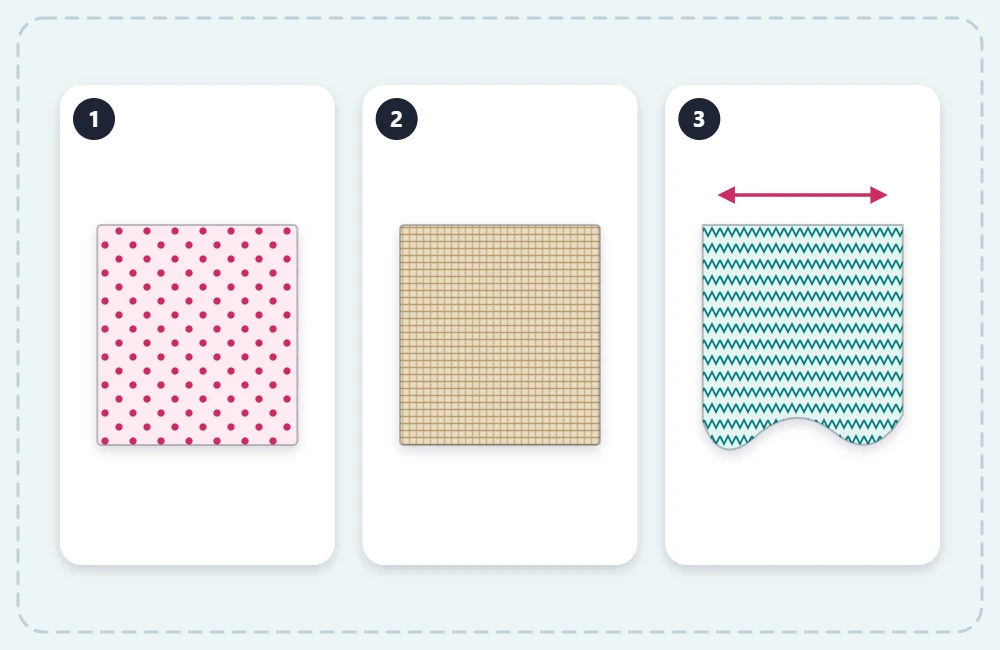
The second swatch in the drawing, canvas or a sturdy linen, is a reasonable next step for totes and baskets. The third, a knit, is best left until straight seams on woven fabric feel routine.
Woven vs Knit Fabric
Every fabric is built in one of two main ways, and the difference changes how it behaves at the machine.
- Woven fabric is made of threads that cross over and under each other at right angles, like a basket. It has little or no stretch along its length or width, and its cut edges fray. Quilting cotton, canvas, denim, linen and flannel are all wovens.
- Knit fabric is made of interlocking loops, like a sweater. It stretches, its cut edges often curl, and it does not fray. T-shirt jersey and sweatshirt fleece are knits.
A quick test in the store: pull the fabric gently across its width. If it stretches easily and springs back, it is a knit. If it barely gives, it is a woven.
Knits are not difficult once you know how, but they call for a ballpoint or stretch needle and a stitch that stretches with the fabric, and they tend to ripple if they are pulled while sewing. That is a lot of extra variables for a first project, so begin with wovens.
Fabric Weight and What It Means
Weight describes how thick and heavy a fabric is. It affects how a project hangs, how well it holds a shape and which needle the machine needs.
| Weight | Examples | Good For | Usual Needle |
|---|---|---|---|
| Light | Lawn, voile | Scarves, linings | Universal 70/10 |
| Medium | Quilting cotton, poplin | Pillow covers, napkins, pouches | Universal 80/12 |
| Heavy | Canvas, denim | Tote bags, baskets | Universal 90/14 |
Medium weight is the forgiving middle. Light fabrics shift and can be pulled down into the needle plate, while several layers of heavy fabric can be more than a basic machine handles comfortably. The article on sewing machine needles and thread explains how to match needle size to fabric in more detail.
Fiber matters as well. Cotton and linen tolerate a hot iron and hold a pressed fold, which makes hems much easier. Many synthetic fabrics need lower heat and resist creasing. Check the end of the bolt, the cardboard core the fabric is wrapped around, for the fiber content and care instructions.
How Fabric Grain Works
Grain is the direction of the threads in a woven fabric. The tightly woven finished edges that run down both sides of the fabric are called selvages, and they are your reference for finding the grain.
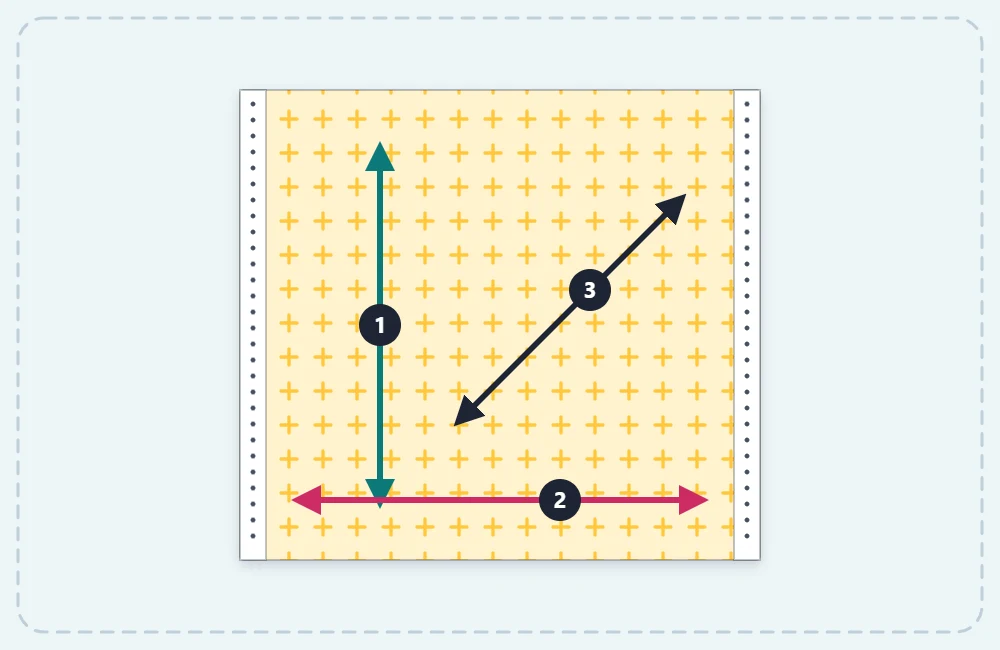
- Lengthwise grain runs parallel to the selvages. It is the most stable direction, with the least stretch.
- Crosswise grain runs from selvage to selvage and has a little more give.
- Bias is the diagonal at 45 degrees to both. Even a woven fabric stretches noticeably on the bias.
For beginner projects the rule is simple: cut rectangles with their edges parallel to the selvage and at right angles to it. Pieces cut “on grain” this way keep their shape, while pieces cut at a careless angle stretch along their edges and end up twisted. The selvage itself is woven more tightly than the rest and can pucker after washing, so trim it off rather than including it in a seam. The steps for squaring up and cutting fabric accurately start from this idea.
Check the print too. Some designs have a clear top and bottom, called a directional print, and every piece has to be cut facing the same way. A small all-over print with no direction is the easiest to work with and hides slightly wobbly stitching.
Prewash Before You Cut
Cotton and linen shrink the first time they are washed. If that happens after the project is sewn, the seams pucker and the finished size changes. Prewashing means washing and drying the fabric before cutting, the same way the finished item will be cared for.
Tip
Because of shrinkage and the need to straighten the cut ends, buy a little more than the project lists. An extra 1/4 yard (0.25 m) is a comfortable margin.
Washing also removes the finish that makes new fabric feel stiff and rinses out excess dye from strong colors. Cut edges fray in the wash, so expect some loose threads and trim them away afterward. Then press the fabric flat before measuring; wrinkled fabric cannot be cut accurately. If the difference between gliding the iron and setting it down is unfamiliar, the guide to pressing for sewing covers it.
Fabrics to Leave for Later
None of these are off limits forever, but each adds a challenge that has nothing to do with learning to sew a straight seam:
- Slippery fabrics such as satin and chiffon slide out of position while being cut and sewn.
- Stretchy knits need different needles and stitches.
- Very thick fabrics such as upholstery weights are hard to feed through in several layers.
- Napped fabrics such as velvet and corduroy have a surface that looks different from each direction.
- Stripes and plaids need careful matching at the seams.
Choose a medium-weight woven cotton, wash it, press it and cut it on grain, and the fabric will work with you instead of against you.
Frequently asked questions
What is the easiest fabric to sew for a beginner?
Medium-weight woven cotton, usually sold as quilting cotton. It does not stretch or slip, presses well and feeds evenly through the machine.
Can old bedsheets be used for sewing practice?
Yes. Cotton or cotton-blend sheets are woven, already washed and cost nothing, which makes them good for practicing seams and hems.
What is a fat quarter?
A fat quarter is a precut piece of quilting cotton measuring about 18 x 22 inches (46 x 56 cm). It is a convenient size for small projects such as pouches and coasters.
Does polyester fabric need prewashing?
Polyester shrinks very little, so prewashing is less critical than with cotton or linen. Washing it once still removes factory finishes, and it is wise when the fabric will be combined with cotton.