Essential Sewing Tools for Beginners: What to Buy First and What Can Wait
A first sewing kit needs fewer tools than the store shelves suggest. Here is what to buy before the first project and what can wait until later.
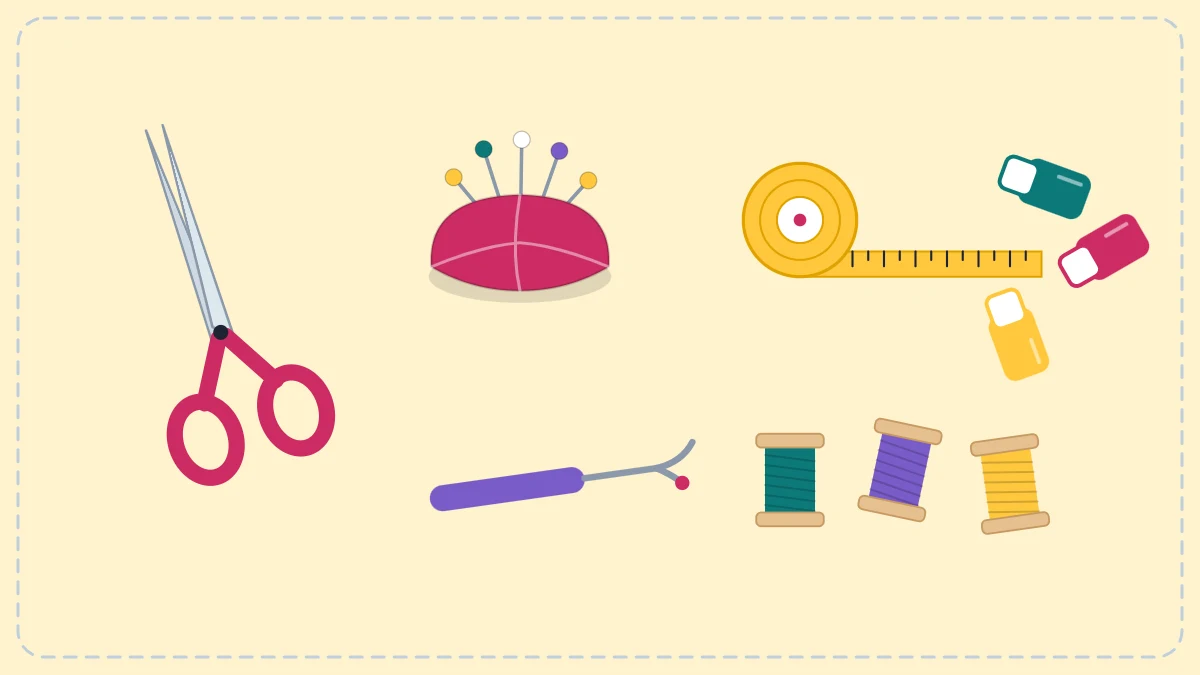
Fabric stores sell hundreds of gadgets, and almost none of them are needed on day one. A sensible set of sewing tools for beginners fits in a shoebox: something to cut with, something to measure with, something to hold layers together and something to undo mistakes. Buying only those first leaves more of the budget for fabric, which is where the practice actually happens.
Cutting Tools
Clean cutting matters more than almost any other step, because a piece that is cut crooked cannot be sewn straight. Three tools cover nearly every cutting job.
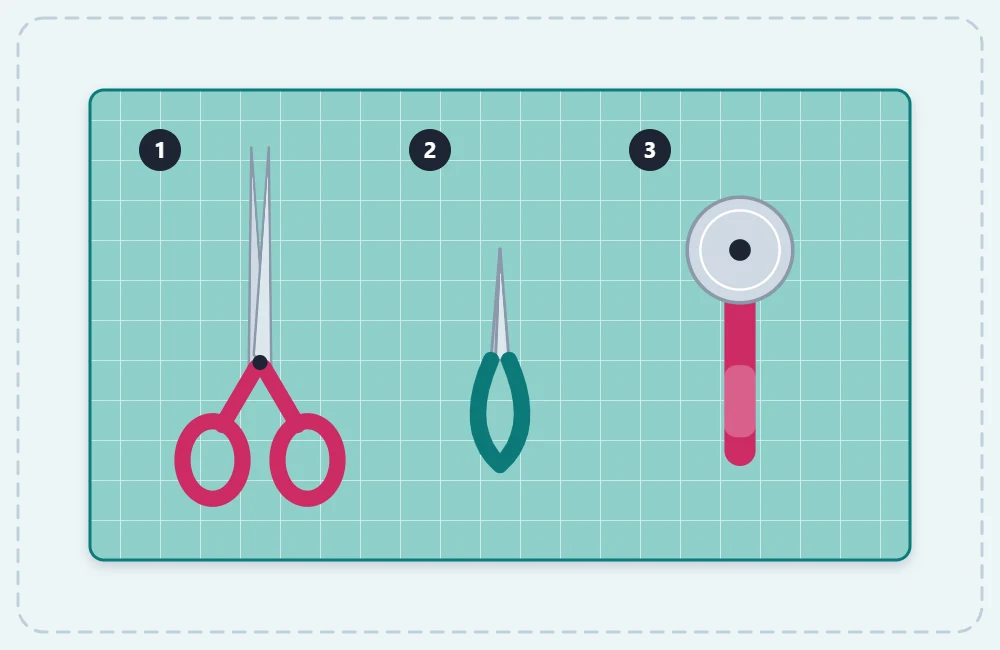
- Fabric shears. Look for blades about 8 inches (20 cm) long and a bent handle, which lets the lower blade stay flat on the table while you cut. Use them on fabric only. Paper dulls the edge quickly, and dull shears chew fabric instead of slicing it.
- Thread snips. A small pair of snips or embroidery scissors stays beside the machine for trimming thread tails. Reaching for big shears every time is awkward and risks nicking the project.
- Rotary cutter. This is a rolling circular blade on a handle, used together with a self-healing cutting mat and a ruler. It cuts long straight lines quickly and accurately, but it is an optional purchase at the start.
Watch out
A rotary blade is extremely sharp. Close the blade guard every single time you set the cutter down, cut away from your body, and use it only on a cutting mat.
Shears are enough for a first project. Once you are cutting many rectangles, the guide to cutting fabric accurately compares scissors and rotary cutters in more detail.
Measuring and Marking Tools
Sewing instructions are a list of measurements, so you need a reliable way to measure flat fabric, measure small folds and draw a line you can follow.
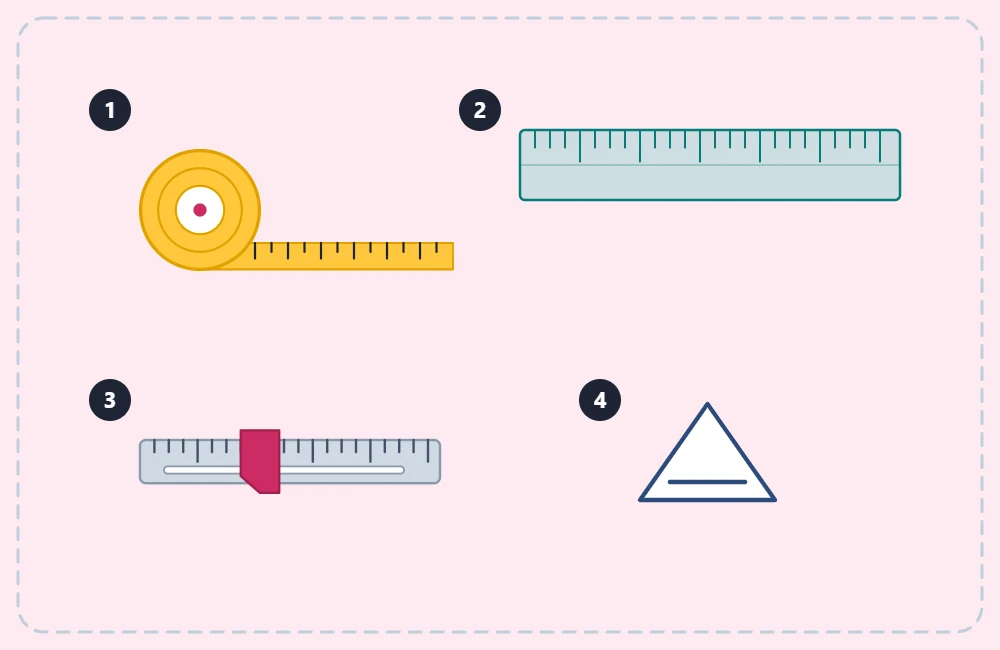
- Tape measure. A flexible 60 inch (150 cm) tape measures anything curved or longer than a ruler, such as a pillow form or the length of a table.
- Clear ruler. Because you can see the fabric through it, a clear ruler makes it easy to draw lines parallel to an edge. A 6 x 24 inch (15 x 60 cm) ruler is the usual partner for a rotary cutter, but a shorter one is fine for marking.
- Seam gauge. This is a short metal ruler, about 6 inches (15 cm) long, with a sliding marker. Set the slider to the depth of a hem or seam allowance and check the fold all the way along without rereading the numbers.
- Chalk marker. Chalk draws cutting and stitching lines that brush away afterward. Test any marking tool on a scrap of your fabric first to be sure the line comes out.
Pins, Clips, Hand Needles and Thread
Fabric layers shift as they pass under the presser foot, so they need to be held together before sewing. Straight pins are the standard tool. Pins with glass heads are easy to see and will not melt if the iron touches them. Keep them in a pincushion or a magnetic dish rather than loose on the table, and remove each one before it reaches the needle; sewing over a pin can break the needle.
Sewing clips are small spring clips that grip an edge without piercing it. They are handy for thick stacks of layers, but they are not essential yet. The article on pins versus clips explains when each one works better.
Add a small pack of assorted hand needles for closing openings and sewing on buttons, plus a pack of universal 80/12 machine needles, the size suited to medium-weight woven fabric. For thread, buy all-purpose polyester in white and in a medium gray, which blends into a surprising range of colors. Very old or bargain thread tends to shed lint and snap, so a decent spool is worth the small extra cost. There is more detail in the guide to choosing needles and thread.
A Seam Ripper and an Iron
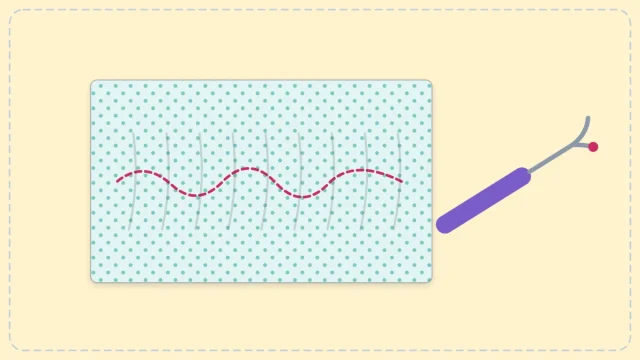
A seam ripper is a small forked blade that slides under a stitch and cuts it. It is the tool for taking out a seam that went wrong, and people who have sewn for decades still use one regularly. Slip the point under every third or fourth stitch, cut, then pull the thread out from the other side. Do not run it along the seam at speed, because that can slice the fabric.
An ordinary household steam iron and an ironing board complete the kit. Pressing each seam flat as it is sewn makes more difference to the finished look than any gadget. If the idea is new, read about pressing for sewing before the first project.
Tip
Look through the accessory box that came with your machine before shopping. Many machines include a seam ripper, spare bobbins, a small screwdriver and a lint brush.
What to Buy First and What Can Wait
| Tool | When | Why |
|---|---|---|
| Fabric shears | Buy first | Every project starts with cutting |
| Thread snips | Buy first | Trim thread tails at the machine |
| Tape measure and seam gauge | Buy first | Measure fabric, hems and seam allowances |
| Chalk marker | Buy first | Mark cutting and stitching lines |
| Pins and a pincushion | Buy first | Hold layers together |
| Seam ripper | Buy first | Undo mistakes cleanly |
| Thread and universal 80/12 needles | Buy first | Needles wear out and need replacing |
| Rotary cutter, mat and clear ruler | Can wait | Faster for many straight cuts, but shears do the job |
| Sewing clips | Can wait | Useful for thick layers |
| Specialty presser feet | Can wait | Buy one only when a project calls for it |
The rule for everything in the bottom half of the table is the same: wait until a specific project needs the tool, then buy that one item. Large sets of gadgets bought in advance mostly sit in a drawer.
How to Look After Your Tools
A few habits keep a basic kit working well for a long time. Keep fabric shears away from paper, tape and wire, and tell the rest of the household they are off limits. Throw away bent or blunt pins, since they snag fabric. Store hand needles in a needle case or stuck into a pincushion, and drop used machine needles into a small lidded container before discarding them.
Bobbins are not interchangeable between all machines, so check your machine’s manual for the correct type before buying extras. Finally, keep everything in one box or basket. A kit you can carry to the table in one trip makes it much easier to sit down and sew for twenty minutes.
Frequently asked questions
Are ready-made sewing kits worth buying?
Small boxed kits are convenient, but the scissors and thread in them are often low quality. Buying the main tools separately usually gives better results for a similar cost.
Can regular household scissors cut fabric?
They can in a pinch if they are sharp, but scissors that have cut paper are usually too dull for clean fabric edges. A pair kept only for fabric cuts far more accurately.
Do beginners need a rotary cutter?
No. A rotary cutter, mat and ruler speed up straight cuts, but fabric shears and a chalk line handle a first project perfectly well.