How to Sew Cloth Napkins With Neat Corners
Sew a set of four cloth napkins with double-fold hems and tidy folded corners. Includes cut sizes for three napkin sizes and fixes for rippled hems and missed folds.
Tutorial at a glance
Materials
- 1 1/4 yards (1.15 m) of cotton or linen fabric
- All-purpose thread to match the fabric
- Universal 80/12 machine needle
- Ruler or seam gauge and fabric marker
- Scissors or rotary cutter and mat
- Sewing clips or pins
- Iron and ironing board
Cloth napkins are four straight hems and four corners, which makes them one of the most useful ways to practice accurate folding and stitching. A set of four takes one length of cotton, and each napkin repeats the same steps, so the fourth one nearly always looks neater than the first. The method here uses a double-fold hem, where the raw edge is folded under twice so it is fully enclosed and can go through the wash again and again.
Choosing Fabric for Napkins
Pick a woven fabric made from natural fibers, because it absorbs spills and tolerates frequent washing. Quilting cotton is the easiest to fold and press. Cotton-linen blends and medium-weight linen feel more substantial but fray faster, so handle the cut edges gently. Avoid polyester blends that repel water, and avoid anything stretchy.
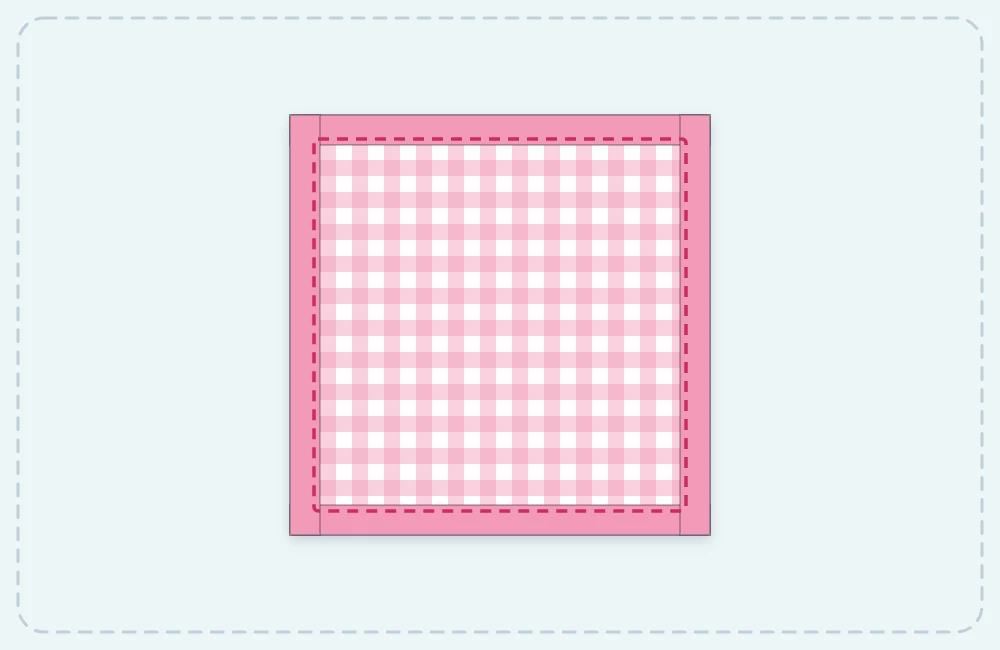
Check both sides of a print before buying. A napkin is seen from the front and the back, and some prints look pale on the wrong side. Woven patterns such as gingham or chambray look the same on both faces. For more help, see the guide to choosing fabric.
Tip
Prewash and dry the fabric the same way the finished napkins will be laundered. Cotton and linen shrink in the first wash, and it is better for that to happen before the squares are cut.
What You Need
- 1 1/4 yards (1.15 m) of cotton or linen fabric, at least 42 inches (107 cm) wide, for four napkins
- All-purpose thread that matches the fabric
- A universal 80/12 machine needle
- A ruler or seam gauge and a fabric marker
- Scissors, or a rotary cutter with a mat
- Sewing clips or pins
- An iron and ironing board
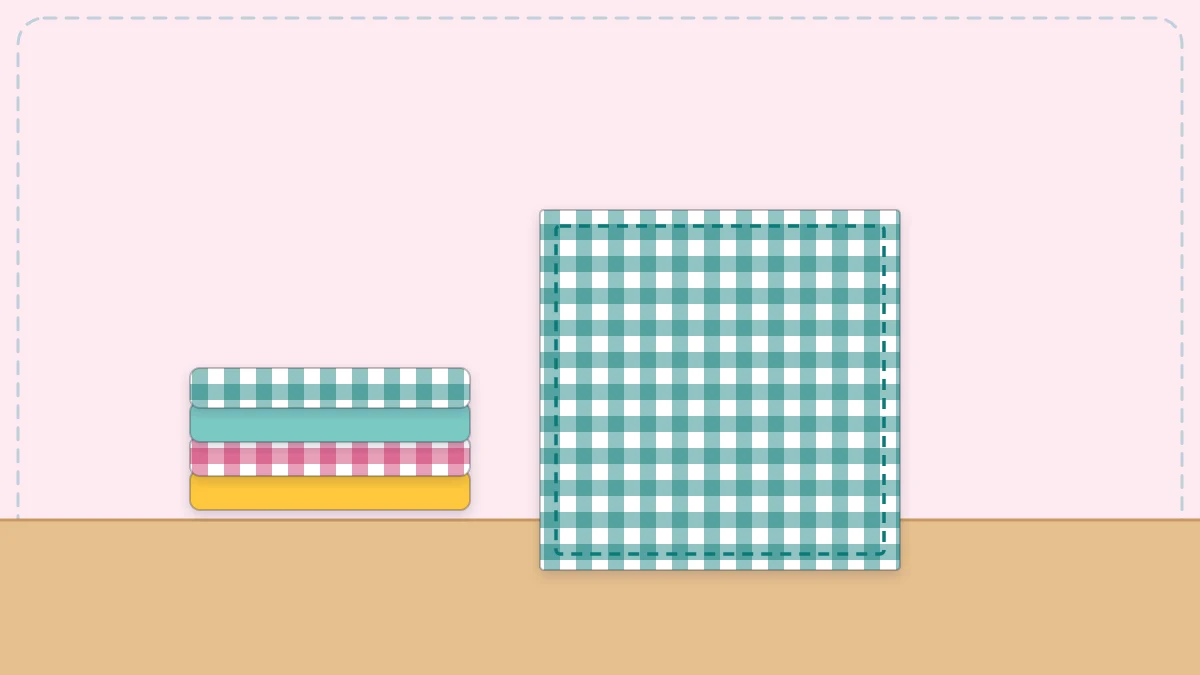
Four 18 inch squares fit into exactly one yard, but the extra quarter yard covers shrinkage and lets you trim the cut ends straight.
Cutting List
Each hem uses 1 inch (2.5 cm) of fabric: a 1/2 inch (1.3 cm) first fold and a 1/2 inch second fold. With a hem on every side, the cut square is 2 inches (5 cm) larger than the finished napkin. The instructions below make the everyday size; the table gives two alternatives.
| Napkin | Cut Square | Finished Size |
|---|---|---|
| Cocktail | 12 x 12 in (30.5 x 30.5 cm) | 10 x 10 in (25.5 x 25.5 cm) |
| Everyday | 18 x 18 in (45.5 x 45.5 cm) | 16 x 16 in (40.5 x 40.5 cm) |
| Large dinner | 22 x 22 in (56 x 56 cm) | 20 x 20 in (51 x 51 cm) |
Cut four squares, keeping the edges parallel to the woven threads of the fabric. Squares cut off-grain twist after washing and never fold flat. The article on cutting fabric accurately shows how to square up the fabric first.
Step-by-Step Instructions
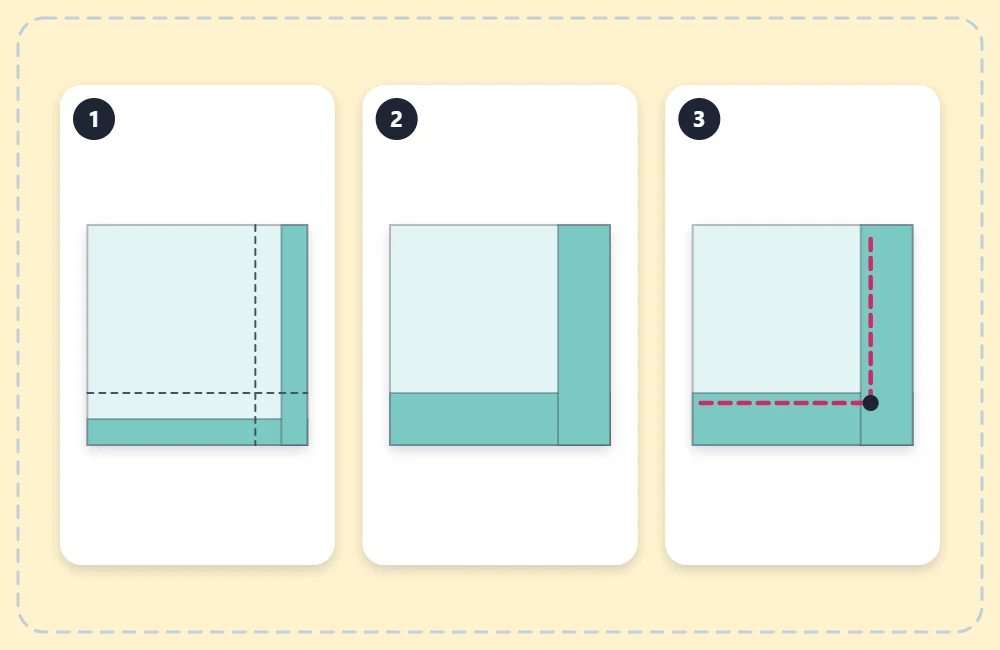
- Press the first folds. Lay one square wrong side up. Fold one edge over by 1/2 inch (1.3 cm), checking the depth with a seam gauge every few inches, and press. Repeat on the other three edges. At each corner the folds overlap in a small square.
- Press the second folds. Fold two opposite edges over another 1/2 inch so the raw edges disappear, and press. Then fold the remaining two edges the same way. Each corner is now a tidy square stack with a straight fold on both outer sides.
- Clip the hems. Put one clip on each corner and one or two along each side. Clips hold a thick corner better than pins and do not distort the folds.
- Start sewing on a side. Set a straight stitch about 2.5 mm long. Begin in the middle of one side, not at a corner, with the hem facing up. Stitch close to the inner fold, roughly 3/8 inch (1 cm) from the outer edge, and backstitch 3 or 4 stitches at the start.
- Pivot at each corner. Sew until the needle is 3/8 inch from the next edge. Stop with the needle down in the fabric, lift the presser foot, turn the napkin a quarter turn, lower the foot and keep sewing.
- Finish the stitching. Continue around all four sides. When you reach the starting point, overlap the first stitches by about 1/2 inch, backstitch and trim the threads close to the fabric.
- Press the napkin. Give the finished hems a firm press from both sides, then repeat the steps for the other three squares.
Getting Neat Corners
Corners are where napkins look handmade in a good or a bad way. Three habits make the difference.
Fold in the Same Order Every Time
Always fold the same pair of opposite sides first. Every corner then stacks the same way, and the set looks consistent.
Help the Machine Over the Bulk
A double-folded corner in quilting cotton is several layers thick. Sew slowly as you approach it. If the presser foot tilts and the machine hesitates, turn the handwheel by hand for a few stitches. Keep your fingers to the sides of the foot, never in front of the needle.
Stop at the Right Spot
If you pivot too early or too late, the stitching runs off the hem or leaves a loose flap. Mark the pivot point with a small dot of fabric marker until you can judge it by eye.
Common Problems and Fixes
- The hem ripples. The fabric was stretched while it was pressed or sewn. Press by lifting and lowering the iron instead of sliding it, and let the machine feed the fabric without pulling.
- The stitching misses the fold. The hem depth varies. Re-press with a seam gauge, or review how to sew a double-fold hem.
- Threads poke out at the edge. The first fold was too shallow in places. Unpick a few inches with a seam ripper, tuck the raw edge fully under and restitch.
- The napkin is not square. The piece was cut off-grain. It is still usable, and the next square can be cut more carefully.
Washing and Using Your Napkins
Wash cotton napkins with similar colors and smooth them flat while they are still slightly damp to reduce ironing. Leftover fabric from the same length makes a matching set of reversible placemats, and a narrower version of the same hem is used on a bandana.
Frequently asked questions
What is the best fabric for cloth napkins?
Woven cotton, linen and cotton-linen blends are the usual choices because they absorb moisture and wash well. Quilting cotton is the easiest of these to fold and press accurately.
Are mitered corners necessary on napkins?
No. A simple folded corner, where the hems overlap in a square, is sturdy and looks tidy. Mitered corners are a neat refinement to learn later, once the basic hem feels comfortable.
How many napkins come from one yard of fabric?
Four 18 inch squares fit in one yard of fabric that is at least 36 inches wide after washing, with no room to spare. Buying a little extra allows for shrinkage and straightening the edges.